Pressure indicators & pressure gauges
Pressure indicators and gauges give a clear, visual reading of the pressure in a central lubrication system. Because pressure is the most direct signal of whether a network is building up correctly and reaching its points, a well-placed indicator lets operators and service staff verify the state of the system at a glance — without instruments or controls
Pressure indicators & pressure gauges at a glance
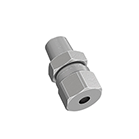
Diaphragm pressure display
Diaphragm mechanism for precise and reliable pressure measurement. Ideal for applications with subtle pressure changes and low hysteresis.
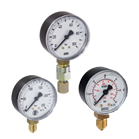
Manometer (pressure gauge)
Various connection types, operating pressure range 0-600 bar. Robust housing and clear scaling for industrial applications.
Pressure indicators & gauges for lubrication systems
Pressure indicators and gauges give a clear, visual reading of the pressure in a central lubrication system. Because pressure is the most direct signal of whether a network is building up correctly and reaching its points, a well-placed indicator lets operators and service staff verify the state of the system at a glance — without instruments or controls. They are a simple, robust complement to electronic pressure sensors and form part of the same monitoring layer that keeps a lubrication system transparent and reliable. The indicator is connected to the lubrication line and displays the prevailing pressure mechanically — typically via a gauge or a pop-up indicator pin. When the pump builds pressure during a lubrication cycle, the indicator responds; when the system relieves, it returns. This makes it easy to confirm that a cycle has run and that the line is pressurising as expected, and to spot a blockage or a loss of pressure during routine checks. Immediate, visual reading of system pressure No power or controls required — simple and robust Helps confirm cycles and locate blockages or pressure loss Ideal complement to electronic pressure sensors Supports commissioning and routine maintenance checks Pressure indicators sit at the points where pressure information matters most — at the pump, on main lines or near critical groups. Combined with electronic sensors and a control unit such as the VIP5, they give both an instant visual check and a signal that can be logged and alarmed, so the lubrication system stays fully transparent. Indicators are selected by the pressure range of the system and the connection type. They are essentially maintenance-free; care is limited to keeping the display clean and legible and to the usual inspection of the lubrication lines. A reading that no longer matches the expected pattern is an early sign that the line or a metering element needs attention.
Pressure indicators & pressure gauges at a glance
Diaphragm pressure display
Diaphragm mechanism for precise and reliable pressure measurement. Ideal for applications with subtle pressure changes and low hysteresis.
Manometer (pressure gauge)
Various connection types, operating pressure range 0-600 bar. Robust housing and clear scaling for industrial applications.