Pumps with mechanical drive
Mechanically driven pumps take their drive from the movement of the machine itself, delivering lubricant in step with operation and without a separate motor or air supply. A cam, an eccentric or a rotating shaft on the machine actuates the pump, so a dose of oil or grease is delivered every time the machine moves — and only when it moves
Pumps with mechanical drive at a glance
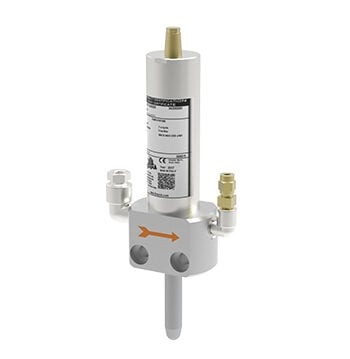
Piston pump 3420001
Compact piston pump with camshaft drive – ideal for the reliable lubrication of gears, guides, chains and other mechanical components. Robust construction for long-term use under industrial conditions.
Mechanically driven lubrication pumps
Mechanically driven pumps take their drive from the movement of the machine itself, delivering lubricant in step with operation and without a separate motor or air supply. A cam, an eccentric or a rotating shaft on the machine actuates the pump, so a dose of oil or grease is delivered every time the machine moves — and only when it moves. This direct coupling makes mechanical-drive pumps simple, robust and inherently demand-led: lubrication happens precisely when the machine is working, which is exactly when the points need it. They are a natural choice for machines that already provide a suitable movement and pair well with a progressive distributor. The pump is connected to a moving part of the machine — a cam, eccentric, lever or rotating element — which drives the pump piston through its stroke. Each cycle of the machine produces a corresponding lubrication stroke, so the supply is automatically tied to the machine's duty: more movement, more lubrication; no movement, none. Because no external energy source is needed, the pump is self-contained and reliable, with very little to go wrong. Driven by the machine's own movement — no separate motor or air supply Lubrication automatically tied to machine duty Simple, robust and self-contained Demand-led: more movement, more lubrication Pairs naturally with progressive distribution The pump is selected by the available drive movement, the medium (oil or grease), the required delivery and the number of points. Connected to the right moving element and feeding a progressive distributor, it forms a complete, low-complexity lubrication system. For machines without a suitable movement, an electric, pneumatic or hydraulic pump is the alternative. Mechanically driven pumps are low-maintenance: with no electrical or pneumatic drive to service, routine care is limited to refilling, checking the drive linkage and the usual inspection of the lines and connections. A pump that no longer strokes with the machine points immediately to the drive linkage as the place to look.
Pumps with mechanical drive at a glance
Piston pump 3420001
Compact piston pump with camshaft drive – ideal for the reliable lubrication of gears, guides, chains and other mechanical components. Robust construction for long-term use under industrial conditions.