Magnom filter
The MAGNOM® magnetic filter removes ferrous particles and magnetite from the oil in a lubrication or hydraulic circuit. Unlike a conventional barrier filter that traps particles in a mesh, the MAGNOM® uses a strong, structured magnetic field to attract and hold iron-bearing contamination — including the very fine wear particles and magnetite sludge that pass straight through ordinary filters
Magnom filter at a glance
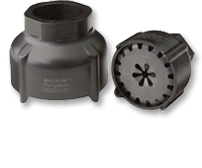
Magnome PumpMate
Magnetic suction filters for liquids, gases and greases. Optimal protection for pumps and systems from metal particles.
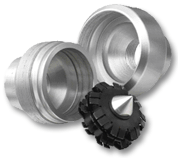
Magnom Mini, Midi, Maxi
Bi-directional magnetic line filters for liquids, gases and greases in two-way systems. Maximum efficiency for small to large systems.
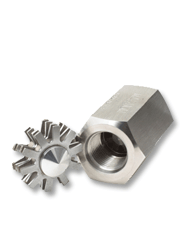
Magnom CP
Magnetic two-way in-line filters for systems with liquids, gases and greases. For critical processes and maximum purity.
MAGNOM® magnetic filter – magnetic particle separation
The MAGNOM® magnetic filter removes ferrous particles and magnetite from the oil in a lubrication or hydraulic circuit. Unlike a conventional barrier filter that traps particles in a mesh, the MAGNOM® uses a strong, structured magnetic field to attract and hold iron-bearing contamination — including the very fine wear particles and magnetite sludge that pass straight through ordinary filters. Because these fine ferrous particles are among the most damaging to bearings, gears and surfaces, capturing them keeps the oil cleaner and the components healthier, extending the life of the whole system. Oil flows through the filter past a set of magnetic collectors arranged so that the field reaches across the full flow path. Ferrous particles — down to sub-micron magnetite — are pulled out of the oil and held on the collectors, while the oil passes through with very low flow resistance. When the collectors are full, they are simply cleaned and returned to service, so there is no disposable element to replace. Captures fine ferrous particles and magnetite that pass through mesh filters Protects bearings, gears and surfaces from the most damaging wear debris Cleanable collectors — no disposable element to replace Very low flow resistance Keeps the oil cleaner and extends component and oil life The right MAGNOM® is selected by the flow rate, the circuit pressure and the connection. As a magnetic filter, it is the ideal complement to barrier filtration where fine iron contamination is the problem. In service it is low-maintenance — the collectors are cleaned on a routine interval and returned to use, rather than replaced.
Magnom filter at a glance
Magnome PumpMate
Magnetic suction filters for liquids, gases and greases. Optimal protection for pumps and systems from metal particles.
Magnom Mini, Midi, Maxi
Bi-directional magnetic line filters for liquids, gases and greases in two-way systems. Maximum efficiency for small to large systems.
Magnom CP
Magnetic two-way in-line filters for systems with liquids, gases and greases. For critical processes and maximum purity.