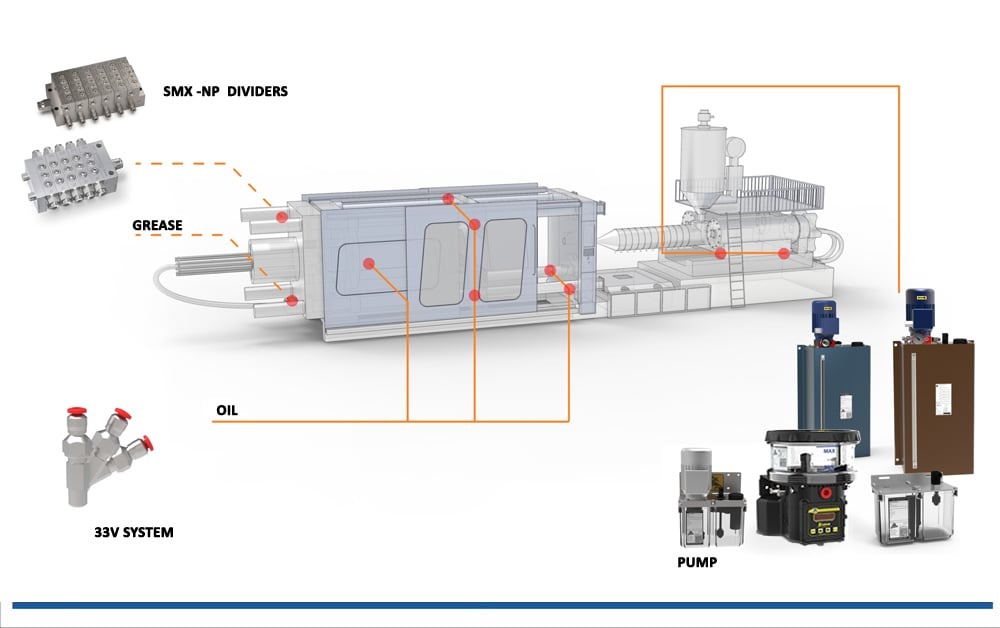
With high thermal loads or large bearing points, the Circulating lubrication Advantages: continuous oil supply, defined quantities and Cooling effect through heat transport.
Working principle Oil is pumped out of the tank, passed through bearings/lubricating points and then returned to the tank after flow - often with a filter, cooler and monitoring. Typical applications Rolling mills, large gearboxes, high-speed bearings Machines with high ambient temperature/load If cooling/flushing of the lubrication area is required Components Pump/unit, tank, filter, cooler if necessary Flow meter, pressure monitoring, temperature sensor Return lines with level/leakage control Design & monitoring Define viscosity/temperature window and desired flow rate Limit values for pressure/temperature/flow → message/alarm to HMI/PLC Regularly check the cleanliness of the oil (filtration) and oil aging Matching components: Lubricants, Control & monitoring è Advice: Contact FAQ
When does circulation lubrication pay off
With high downtime costs and thermal stress, often quickly; Additional cooling saves component wear.
Which sensors are useful
pressure, temperature, flow; optional particle monitoring for critical systems.