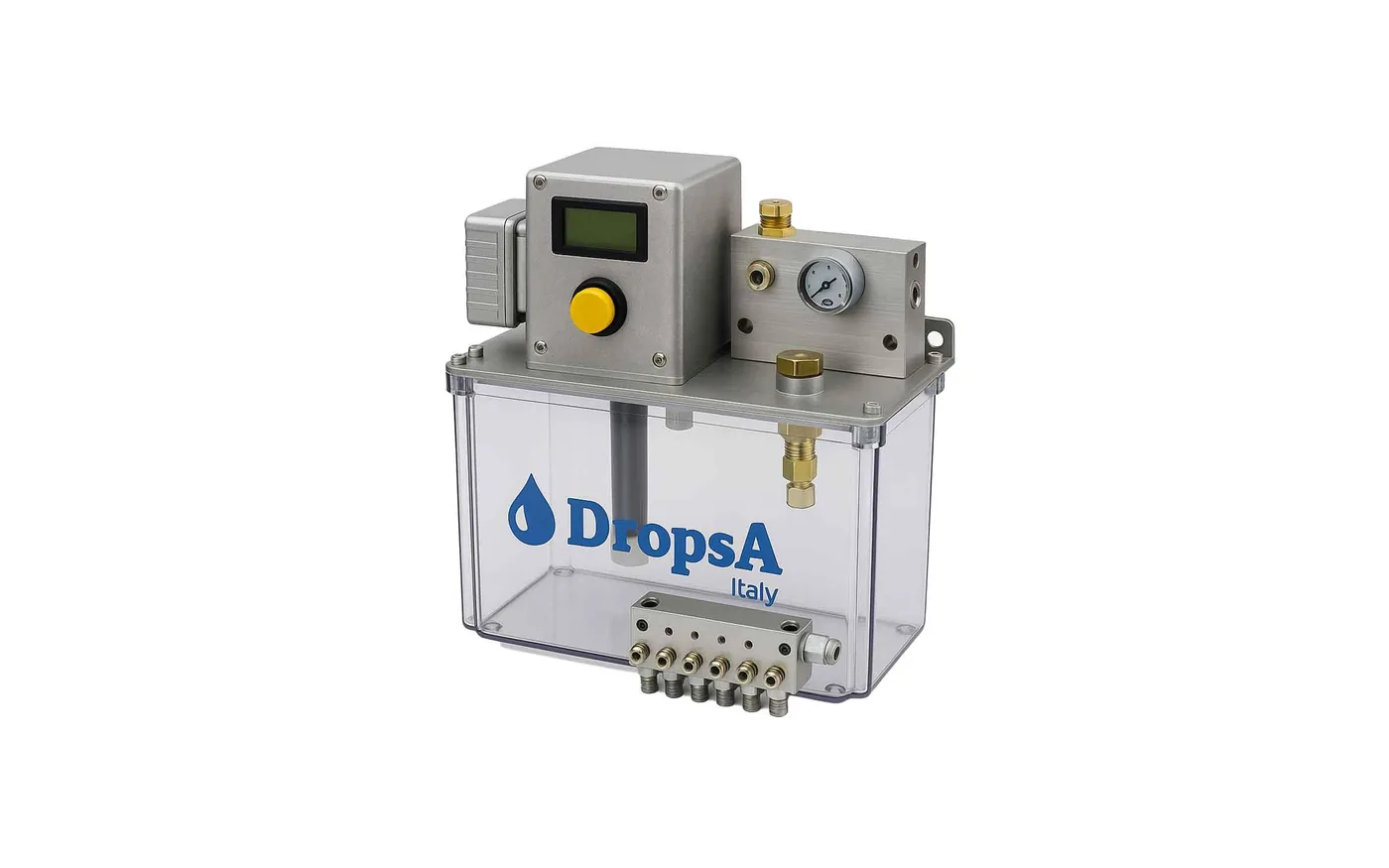
One Central lubrication system supplies many lubrication points automatically – with defined quantities and intervals. This reduces downtimes, saves lubricant and reduces manual maintenance.
Structure (Typical) Pump unit with container (oil/grease), control/timer Distributor: single/dual line or progressive Lines/fittings suitable for the medium Sensors: pressure, stroke (progressive), optional flow/temperature Connection to PLC/HMI for reports/trends Cost factors Number of lubrication points & line lengths Medium & temperature window (oil/fat; viscosity/NLGI) Monitoring depth (sensors, data logging) Assembly/commissioning requirements ROI – that's how you calculate it Simplified example (fictitious values): Previously: 6 h/month manual lubrication è 2 technicians → 12 h; Downtime costs: €400/h → €4,800/month Afterward: 1 h/month visual inspection → €400; Downtime reduced to 1 hour → €400 Savings/month: (4,800 − 800) = €4,000 plus lubricant savings Invest: e.g. B. €20,000 (depending on scope) Payback: 20,000 / 4,000 = ~5 months Actual values vary; We calculate the ROI based on your actual data. Planning checklist Collect points & quantities (per cycle/shift) Select distribution principle (single/dual line vs. progressive) Define sensors/signals (OK/warning/alarm) Lubricant selection (H1 if required) Further: Basics è Components: Pumps & aggregates, Distributor è Advice & offer FAQ
How long does a system last
With correct design and maintenance, many years; Wear parts can be easily replaced.
Oil or fat
Application specific: high speed/cooling → oil; stable film/rough → fat.